Researches
Zhenyu Yang Research Group: An Introduction
The Yang Research Group focuses on the synthesis, surface chemical modification, and optoelectronic device applications of novel semiconductor materials. Grounded in the fundamental study of elemental bonding configurations, we systematically investigate the composition, structure, and physicochemical properties of semiconductor materials at both bulk and surface levels. This enables precise modulation of material characteristics for applications in energy conversion and storage. Our main research directions include:
Synthetic Chemistry
Synthetic chemistry forms the foundation of materials exploration. Our group investigates the structural essence of materials—chemical bonding patterns—to develop and optimize synthetic methodologies for diverse semiconductor materials. Primary research focuses on: covalent semiconductors (such as silicon/germanium-based materials) and ionic semiconductors (such as metal halide perovskites).
Silicon/Germanium Semiconductor Materials
Silicon and germanium are pivotal semiconductor materials exhibiting exceptional structural stability and tunable physicochemical properties. Their adjustable alloy ratios, combined with quantum confinement effects, confer unique optoelectronic characteristics (Fig. 1). Recent advances in low-dimensional Si/Ge-based optoelectronic devices (e.g., light emitters and photodetectors) demonstrate remarkable efficiency and application potential. Low-dimensional Si/Ge materials offer extensive tunability in dimensionality, composition, and surface ligands. Our group achieves precise control over optical and electronic properties through covalent bond engineering, dimensional manipulation, and size regulation. Key advancements include: (i) Doping breakthrough: Utilizing controlled solid-phase redox reactions and atomic diffusion to overcome doping challenges in conventional silicon materials, enabling effective incorporation of metallic/semiconducting elements into Si/Ge semiconductors and their oxides. (ii) Room-temperature synthesis: Combining theoretical and experimental approaches with mild catalytic systems to realize room-temperature silicon crystal synthesis via surface covalent chemistry and 2D silicon bonding characteristics. The resulting porous structures with surface dangling bonds exhibit exceptional catalytic performance.
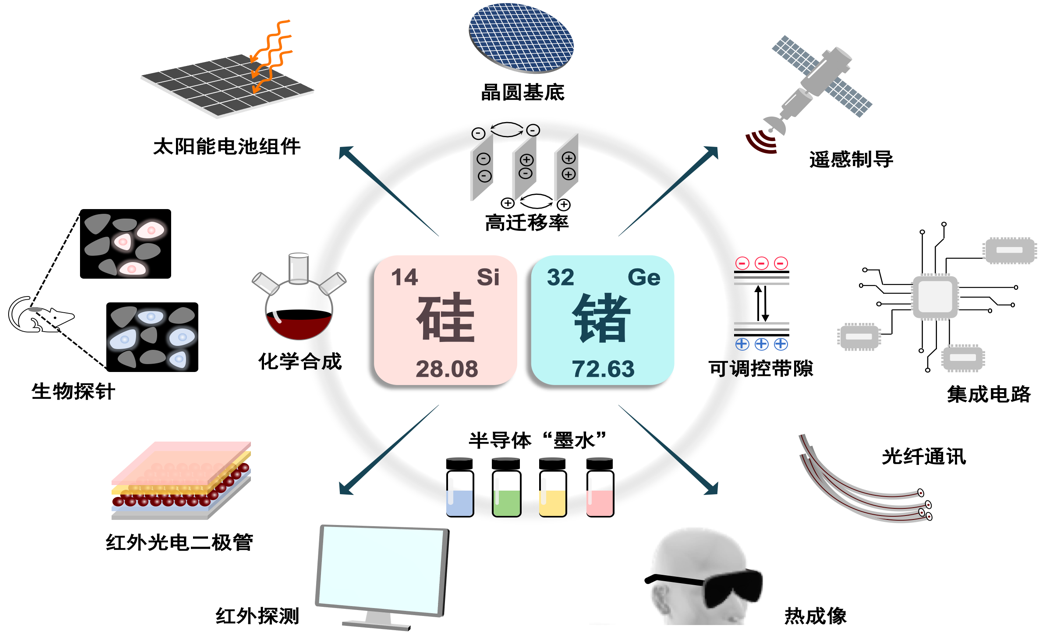
Fig. 1. Characteristics and applications of silicon/germanium semiconductor materials
Metal Halide Perovskites
Solution-processed organic-inorganic semiconductors have garnered significant attention for their low-cost fabrication, scalability, and outstanding optoelectronic performance. Among these, organic-inorganic hybrid metal halide perovskites (hereafter ’perovskites‘) are particularly noteworthy. Conventional perovskites adopt ABX3-type cubic/orthorhombic structures, where large cation incorporation induces octahedral tilting, yielding 2D perovskites. Further dimensionality reduction produces 1D and 0D variants. Organic cations provide unprecedented opportunities for tuning 2D perovskite structures and optoelectronic properties. We design functional organic cationic ligands to: Switch dimensionality Incorporate novel elements/large functional groups Engineer unprecedented material functionalities Recent progress: (i) Post-synthetic transformation: Developed reversible structural conversion methods via mild organic reactions. (ii) Ligand innovation: Designed novel organic cations enabling symmetry control, dimensionality switching, and controlled metal ion doping, with systematic property characterization.
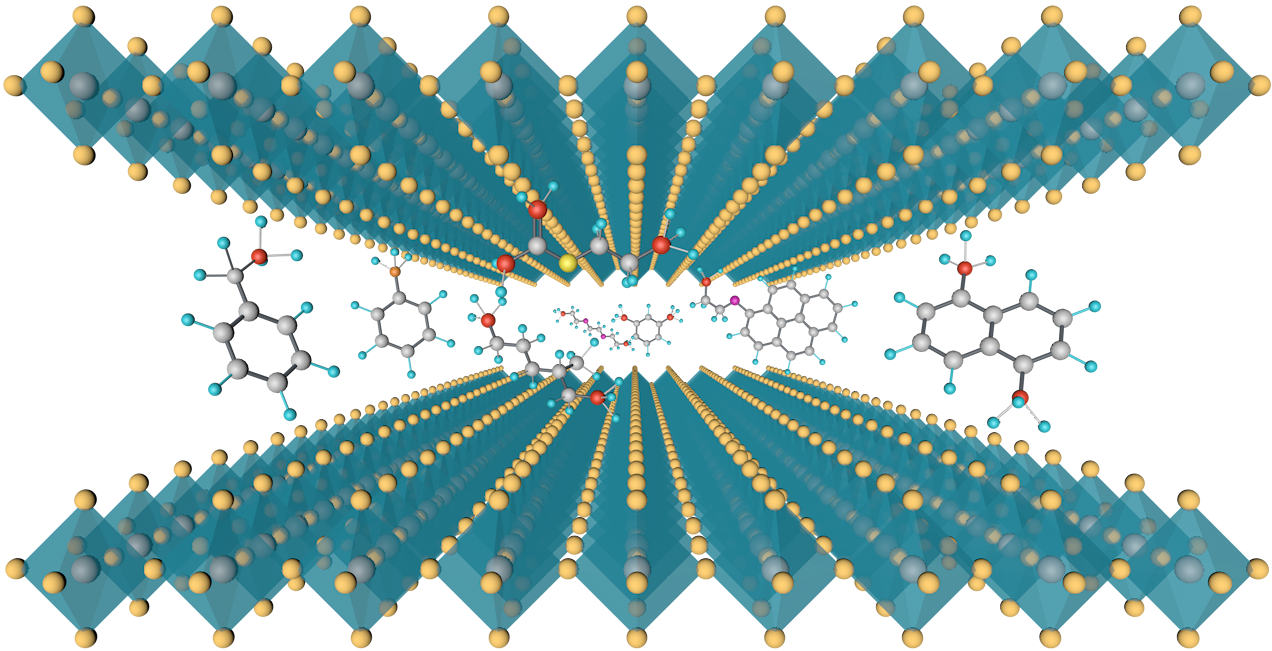
Fig. 2. Structural and property modulation through organic cation engineering in 2D metal halides
代表性成果
- X. Deng, T. Zeng, J. Li, G. Yao, H. Chen, L. Xu, M. Lin, L. Wei, M. Shakouri, J. C. Yu, Y. Wang, Z. Yang.* 'Nucleophilic Attack Enables Crystalline Silicon Formation Through Dehydrocoupling at Room Temperature.' CCS Chem., 2024, accepted, DOI: 10.31635/ccschem.024.202405067.
- H. Chen,† Y. Xiong,† J. Li, J. Abed, D. Wang, A. Pedrazo-Tardajos, Y. Cao, Y. Zhang, Y. Wang, M. Shakouri, Q. Xiao, Y. Hu, S. Bals, E. H. Sargent, C. Su,* Z. Yang.* 'Epitaxially grown silicon-based single-atom catalyst for visible-light driven syngas production.' Nat. Commun., 2023, 14, 1719, DOI: 10.1038/s41467-022-32133-2.
- M. Lai,† L. Wei,† M. Lin, H. Zhang, Y. Zhou, D. Wang, L. Shi, Z. Yang.* 'Dopant - assisted Crystallization Enables Germanium Quantum Dots with Enhanced Product Yields and Optoelectronic Properties.' J. Am. Chem. Soc., 2025, 147, 8125–8131, DOI: 10.1021/jacs.5c00423.
- Z. Yuan,† L. Zhao,† E. Pradhan, M. Lai, T. Zeng, Z. Yang.* 'Postsynthetic Crystalline Transformation in Two- Dimensional Perovskites via Organothiol - Based Chemistry.' CCS Chem., 2022, 4, 855–863, DOI: 10.31635/ccschem.021.202100929.
- W. Li, J. He, Y. Zhang, L. Ye, G. Yao, Z. Zhang, S. Li, X. Lu, H. Lu, Z. Yang.* 'Branched Intercalating Cations Regulate Structural Evolution of Two - Dimensional Perovskites.' Cell Rep. Phys. Sci., 2025, accepted, DOI: 10.1016/j.xcrp.2025.102509.
近期研究成果
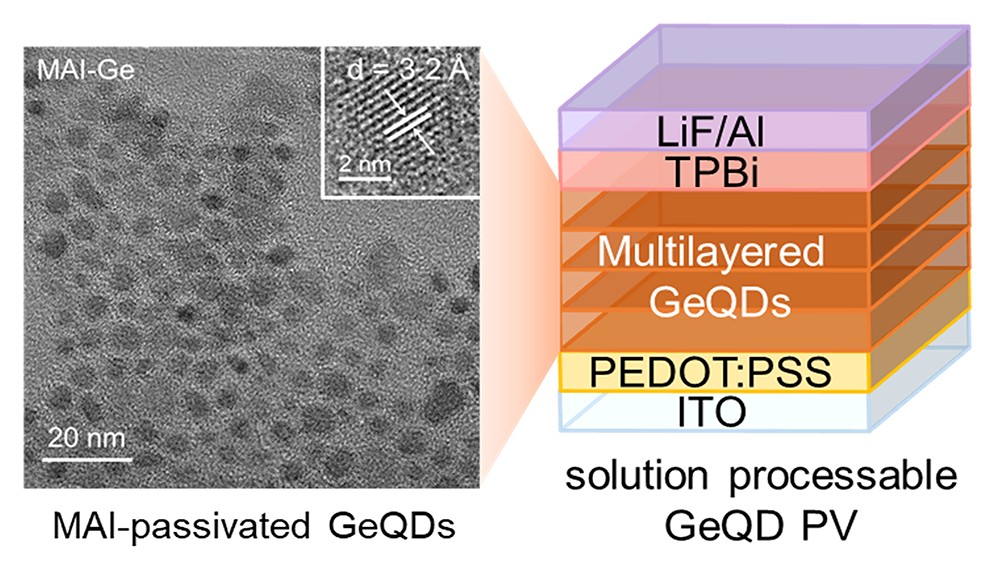
Enhancing charge carrier mobilities in colloidal germanium quantum dot solids via solid-state ligand exchange
M. Lin, L. Wei, X. Wang, Z. Yang.*
ACS Appl. Electron. Mater., 2025, accepted.
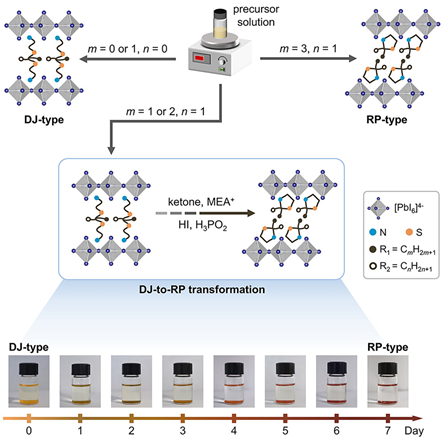
Branched intercalating cations regulate the structural evolution of two-dimensional perovskites
W. Li, J. He, Y. Zhang, L. Ye, G. Yao, Z. Zhang, S. Li, X. Lu, H. Lu, Z. Yang.*
Cell Rep. Phys. Sci., 2025, 6,102509.
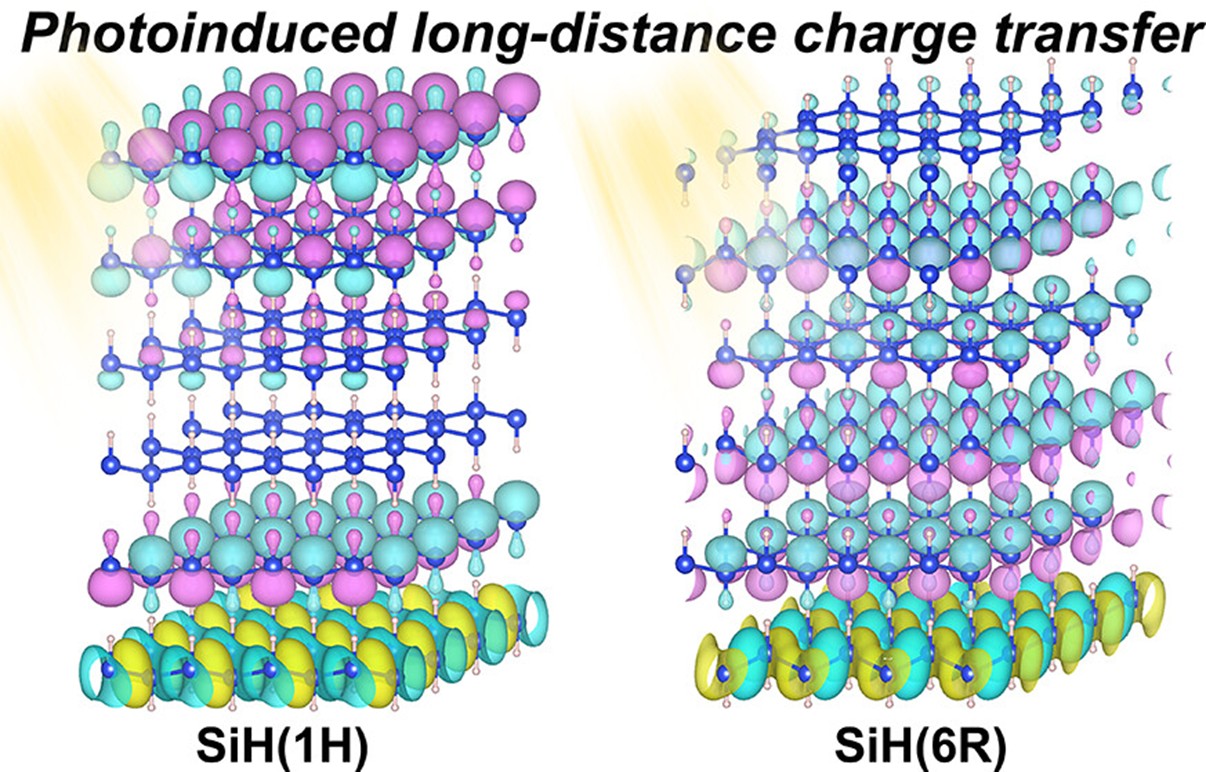
Photoinduced Long-Distance Charge Transfer in Silicanes: The Stacking Matters
G. Yao, E. Pradhan, Z. Yang.*, T. Zeng.*
Nano Lett., 2025, 25, 1697–1705.
Surface Chemistry
Nanocrystals (2-10 nm) contain >50% surface atoms, making surface modification crucial for property control. As surface bonding varies across materials, we develop tailored chemical strategies (Fig. 3). Our surface chemistry program involves: Novel reactions for Si/Ge/perovskite nanocrystals Surface atom-ligand interaction mechanisms Structure-property relationships Application-specific functional ligand design Organic-inorganic hybrid materials Recent progresses: (i) Expanded Si/Ge surface reactions, such as direct arylation, alcohol oxidation, segmented functionalization, and mixed-ligand approaches. (ii) Established ligand-property correlations, deciphered origins of optical behavior changes upon surface modification.
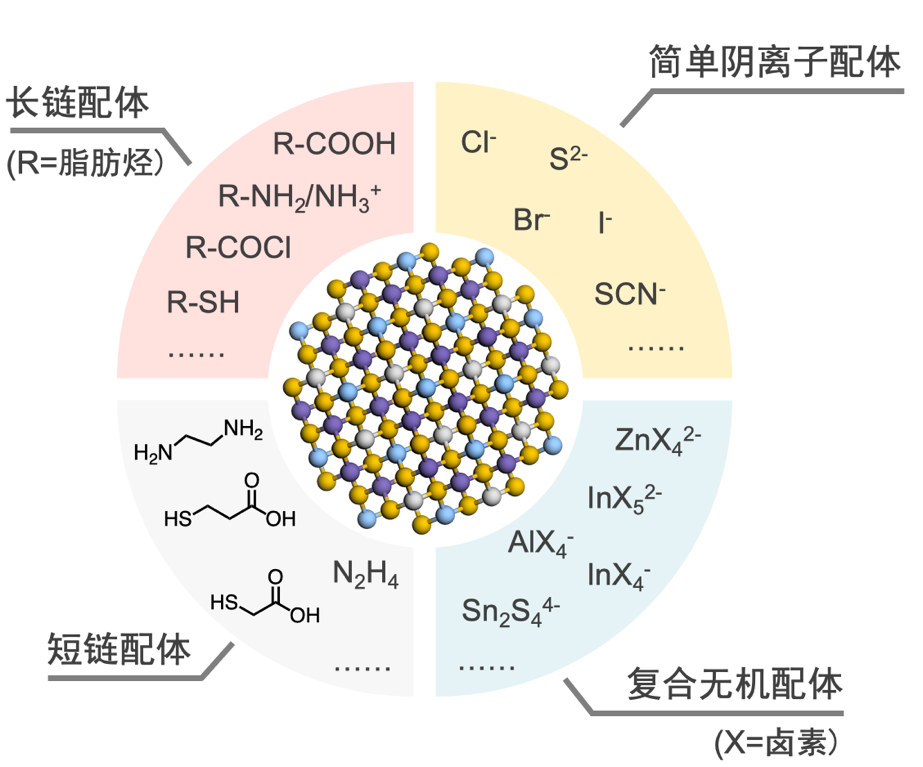
Fig. 3. Ligand engineering for modulating semiconductor nanocrystal properties
代表性成果
- M. Lai,† Y. Zhang,† L. Zhao, Y. Huang, L. Zhang, W. Fu, P. Chen, X. Wang, T. Zhu,* Z. Yang.* 'Direct Arylation of Silicon Nanocrystals with Hexadehydro-Diels–Alder-Derived Benzynes.' Angew. Chem. Int. Ed., 2023, 62, e202304056, DOI: 10.1002/anie.202304056.
- H. Chen,† J. Xu,† Y. Wang, D. Wang, R. Ferrer-Espada, Y. Wang, J. Zhou, A. Pedrazo-Tardajos, M. Yang, J. Tan, X. Yang, L. Zhang, I. Sychugov, S. Chen, S. Bals, J. Paulsson, Z. Yang.* 'Color-Switchable Nano-Silicon Fluorescent Probes.' ACS Nano, 2022, 16, 15450–15459, DOI: 10.1021/acsnano.2c07443.
- M. Lai,† L. Wei,† Y. Huang, X. Wang, Z. Yang.* 'Revisiting the Influence of Surface Alkoxylation on Colloidal Silicon Nanocrystals.' ACS Photonics, 2024, 11, 2439–2449, DOI: 10.1021/acsphotonics.4c00335.
- L. Wei, H. Zhang, L. Shi, Z. Yang.* 'Mixed-ligand-functionalized Silicon-germanium Alloy Nanocrystals with Improved Carrier Mobilities.' Nanoscale, 2024, 1, 6516–6521, selected as part of the themed collection: Nanoscale 2024 Emerging Investigators, DOI: 10.1039/D3NR06008J.
- H. Chen, M. Lai, L. Wei, J. Li, Z. Yang.* 'Advances in Solid-state Synthesis and Surface Chemistry of Silicon Nanocrystals.' Sci. Sin. Chim., 2024, 54, 1399–1412, DOI: 10.1360/SSC-2024-0099.
近期研究成果
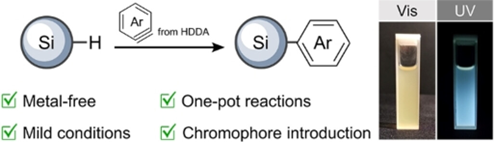
Direct Arylation of Silicon Nanocrystals with Hexadehydro-Diels–Alder-Derived Benzynes
M. Lai,† Y. Zhang,† L. Zhao, Y. Huang, L. Zhang, W. Fu, P. Chen, X. Wang, T. Zhu,* Z. Yang.*
Angew. Chem. Int. Ed., 2023, 62, e202304056.
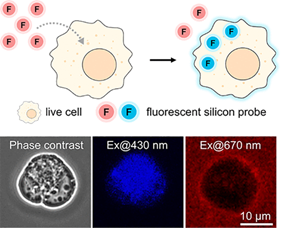
Color-Switchable Nano-Silicon Fluorescent Probes.
H. Chen,† J. Xu,† Y. Wang, D. Wang, R. Ferrer-Espada, Y. Wang, J. Zhou, A. Pedrazo-Tardajos, M. Yang, J. Tan, X. Yang, L. Zhang, I. Sychugov, S. Chen, S. Bals, J. Paulsson, Z. Yang.*
ACS Nano, 2022, 16, 15450–15459.
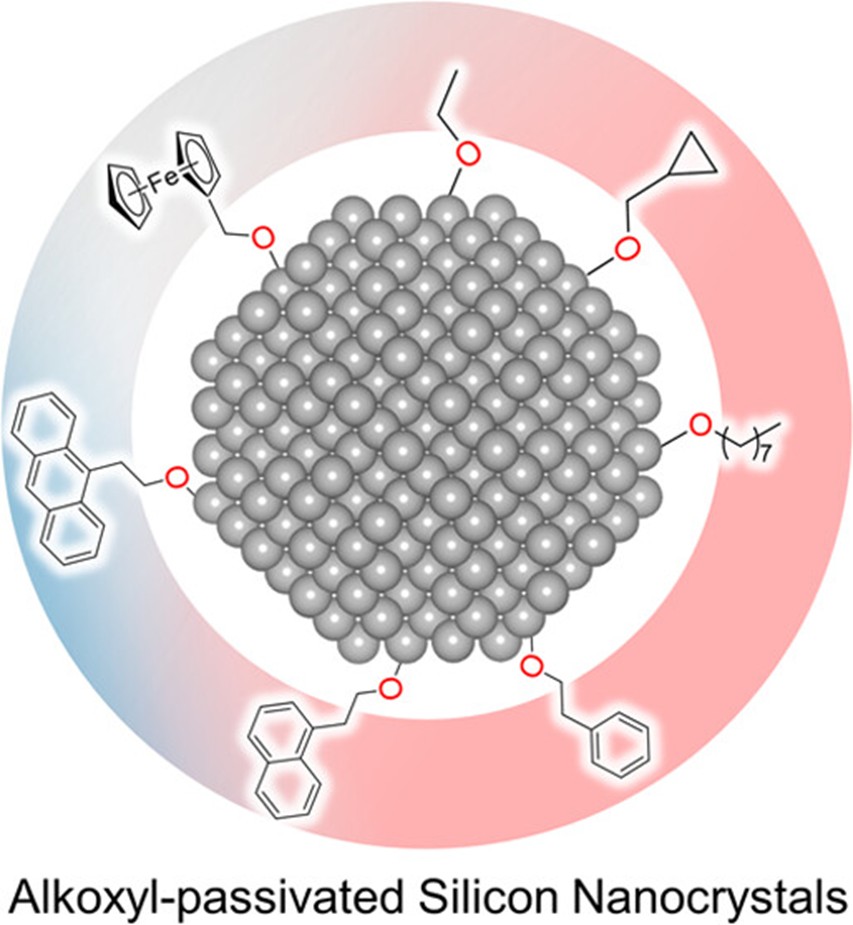
Revisiting the Influence of Surface Alkoxylation on Colloidal Silicon Nanocrystals.
M Lai,† L Wei,† Y Huang, X Wang, Z Yang.*
ACS Photonics, 2024, 11, 2439–2449.
Material Characterization and Device Applications
Diverse material systems and precise surface control enable unique properties (Fig. 4). Combining computational modeling with experimental characterization, we develop: Solar cells Light-emitting diodes (LEDs) Photodetectors Bioimaging probes Li-ion batteries
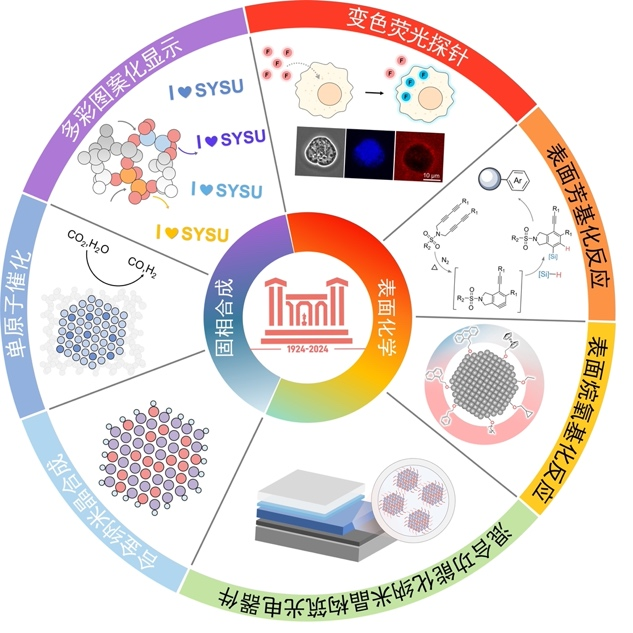
Fig. 4. Energy conversion/storage devices enabled by structural and surface engineering
代表性成果
- G. Yao, E. Pradhan, Z. Yang.*, T. Zeng.* 'Tuning Electronic and Optical Properties of Two-dimensional Silicanes via Covalent Functionalization.' Nano Lett., 2025, 25, 1697–1705, DOI: 10.1021/acs.nanolett.4c05877.
- H. Chen,† M. Wei.† Y. He, J. Abed, S. Teale, E. H. Sargent,* Z. Yang.* 'Germanium silicon oxide achieves multicoloured ultra-long phosphorescence and delayed fluorescence at high temperature.' Nat. Commun., 2022, 13, 4438, DOI: 10.1038/s41467-022-32133-2.
- X. Deng,† X. Zheng,† T. Yuan,† W. Sui, Y. Xie, Y. Wang,* O. Voznyy,* Z. Yang.* 'Ligand Impact of Silicanes as Anode Materials for Lithium-Ion Batteries.' Chem. Mater., 2021, 33, 9357–9365, DOI: 10.1021/acs.chemmater.1c03254.
- W. Li, G. Yao, Y. Zhang, L. Zhang, S. Hu, C. Liu, B. Liu, T. Zeng, Z. Yang.* 'Reduced-Dimensional Perovskites with Dithioketal-Containing Intercalating Cations for Near-Infrared Light-Emitting Diodes.' Inorg. Chem. Front. 2023, 10, 6990–6999, DOI: 10.1039/D3QI01512B.
- C. Ni,† Y. Huang,† T. Zeng, D. Chen, H. Chen, M. Wei, A. Johnston, Z. Ning, E. H. Sargent, P. Hu,* Z. Yang.* 'Thiophene Cation Intercalation to Improve Band‐Edge Integrity in Reduced-Dimensional Perovskites.' Angew. Chem. Int. Ed., 2020, 132, 14081–14087, DOI: 10.1002/anie.202006112.
近期研究成果
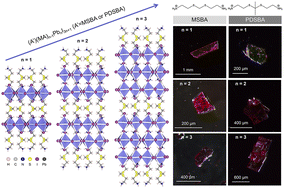
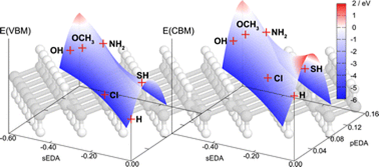
Tuning Electronic and Optical Properties of Two-dimensional Silicanes via Covalent Functionalization.
G. Yao, E. Pradhan, Z. Yang.*, T. Zeng.*
Inorg. Chem. Front., 2023,10, 6990.
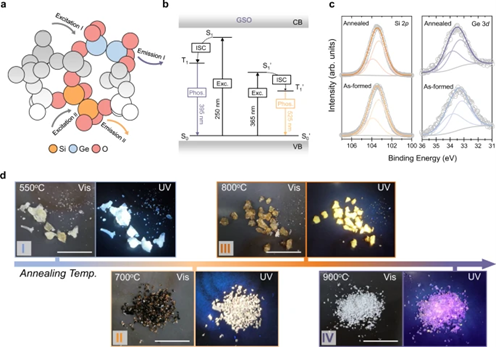
Germanium silicon oxide achieves multicoloured ultra-long phosphorescence and delayed fluorescence at high temperature.
H. Chen,† M. Wei.† Y. He, J. Abed, S. Teale, E. H. Sargent,* Z. Yang.*
Nat. Commun., 2022, 13, 4438.
Two-Dimensional Lead Halide Perovskites with Spirocyclic Intercalating CationsClick to copy article link
G. Yao, E. Pradhan, Z. Yang.*, T. Zeng.*
Phys. Chem. Chem. Phys., 2025, 27, 4845–4857.